


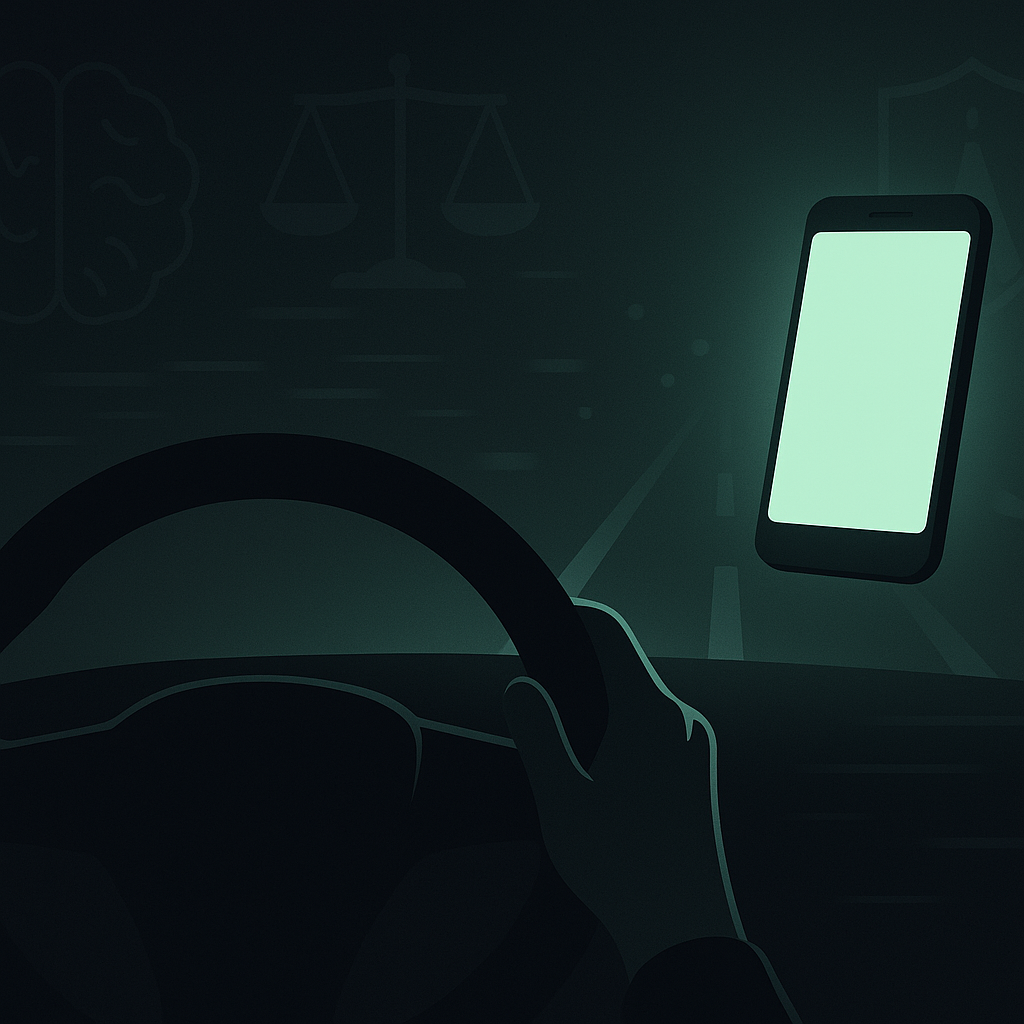
In our modern, connected world, smartphones are ubiquitous and are often used while driving. However, this practice poses significant dangers that go beyond mere distraction. Using a phone at the wheel is not only a risk for the driver themselves but also for all other road users. It is crucial to recognize the various sources of danger and take measures to enhance safety on the roads.
The Different Types of Distraction
Using phones while driving leads to different types of distraction that jeopardize driving safety.
Cognitive Distraction
Cognitive distraction occurs when the driver is mentally occupied with something other than driving. Even if the phone is not being held, just thinking about a message or a call can negatively affect concentration and divert attention from the traffic.
Visual Distraction
Visual distraction happens when the driver's gaze is directed at the phone's screen. This type of distraction is particularly dangerous as it forces the driver to take their eyes off the road. Even just a few seconds can be enough to overlook a hazardous situation.
Manual Distraction
Manual distraction occurs when the driver takes one hand off the steering wheel to operate the phone. This reduces control over the vehicle and significantly increases the risk of an accident.
Legal Consequences of Phone Use While Driving
The use of phones while driving is strictly regulated in many countries and comes with severe penalties.
Legal Regulations
Around the world, there are laws that restrict the use of mobile phones while driving. While these regulations vary, in many countries, hefty fines and points on driving records or comparable systems are the result.
Fines and Penalties
The penalties for using a phone while driving can be substantial. In addition to fines, some countries even impose driving bans. In the long run, this can also affect insurance premiums, as such violations are seen as risky behavior.
Psychological Effects of Phone Use While Driving
The constant need to be reachable and the compulsion to use the phone have profound psychological effects.
Stress and Anxiety
Many people feel stressed or anxious when they cannot immediately respond to messages or calls. This tension can significantly impair concentration while driving and lead to poor decision-making.
Loss of Situational Awareness
The altered perception of risk due to phone use can lead to underestimating dangers on the road. Distracted drivers are less aware of their surroundings and react more slowly to unexpected events.
Phone Addiction
The urge to constantly reach for the phone can become a form of addiction. This habit is particularly dangerous in traffic, as it increases the likelihood of using the phone even in risky situations.
Prevention and Solutions for Enhanced Driving Safety
To minimize the risks of phone use while driving, various approaches can be taken.
Technological Solutions
There are now apps and features that prevent or limit phone use while driving. These technologies can help reduce the urge to use the phone in the car.
Education and Awareness
Campaigns and educational programs play an important role in raising public awareness. They inform about the dangers and promote responsible behavior on the road.
Responsible Driving
Individual responsibility is key to improving driving safety. Tips such as setting up a "Do Not Disturb" mode or storing the phone out of reach can help minimize distractions.
Conclusion
The risks of using a phone while driving are manifold and extend far beyond simple distraction. They encompass legal, psychological, and safety dimensions that must be taken seriously. Responsible driving means being aware of these dangers and taking steps to avoid them. It is time to rethink personal habits and set clear boundaries for phone use in the car.
Your First Step to More Balance
To reduce screen time not only in the car but also in everyday life, the Slofy app can be a valuable tool. With features like screen time tracking, focus modes, and gamification, Slofy helps promote mindful and balanced use of digital media. The app is available for free and offers family-friendly features that can help maintain digital balance. Visit Slofy for more information and start rethinking your digital habits today.