


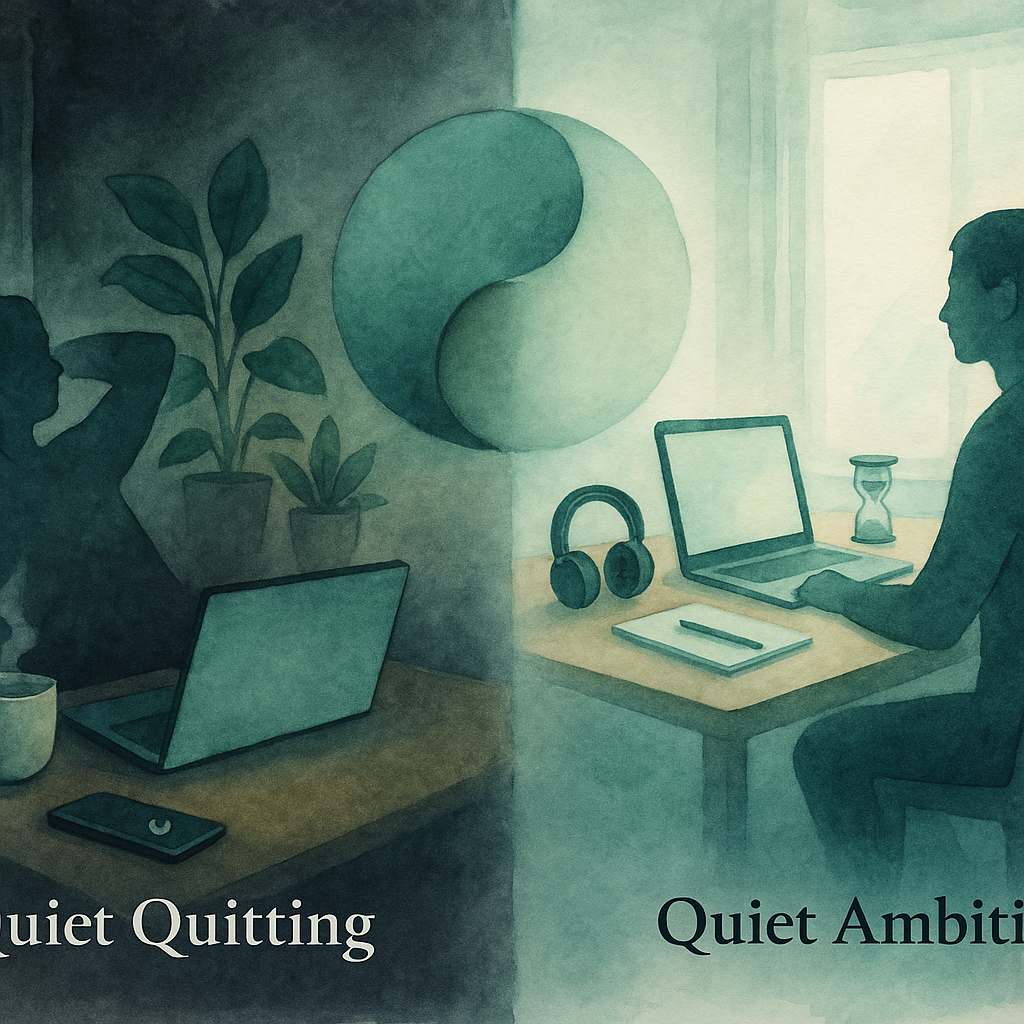
The world of work has changed rapidly, and with it, the way we think about productivity, engagement, and well-being. Phenomena like "Quiet Quitting" and "Quiet Ambition" are not just buzzwords but reflect profound shifts in employee mentality. Especially in home offices, where the lines between work and private life often blur, many face the challenge of finding a healthy balance. This article explores these trends and offers practical strategies for being productive in the digital everyday without burning out – including the role of conscious digital detachment and helpful tools.
Quiet Quitting and Quiet Ambition: Two Sides of the Same Coin
The concepts of Quiet Quitting and Quiet Ambition shape the current discussion about work culture and employee engagement. They show how people react to the pressure and demands of the modern working world.
Definition and Origins of Quiet Quitting: What Does It Mean to Do Only the Bare Minimum?
Quiet Quitting describes the phenomenon where employees meet the minimum requirements of their role but show no additional commitment beyond that. It's not about actually quitting the job, but about emotionally and mentally disengaging from work to protect one's mental health. It is often a reaction to overwork, lack of appreciation, or the feeling that extra effort is not rewarded.
Definition and Motivation Behind Quiet Ambition: Conscious Pursuit of Growth Without Burnout
In contrast, there is Quiet Ambition. This involves consciously pursuing personal and professional goals, but in a way that does not jeopardize well-being. It is a pursuit of success that is not defined by excessive working hours or constant pressure to perform, but by a healthy balance between effort and recovery. People with Quiet Ambition are engaged but set clear boundaries.
The Psychological and Societal Reasons for These Phenomena in the Context of the Modern Working World
Both phenomena are closely linked to the changes in our working world. Increasing globalization, digitalization, and constant availability have increased pressure on employees. At the same time, awareness of mental health and the need for a balanced work-life balance is growing. The pandemic and the spread of home offices have further fueled these discussions, as many have had the opportunity to re-evaluate their priorities.
The Home Office Challenge: Balancing Productivity and Well-being
The home office offers many freedoms but also poses specific challenges that can affect the work-life balance.
Advantages and Pitfalls of the Home Office: Flexibility vs. Blurring Boundaries
The flexibility, the elimination of commuting, and the ability to organize daily work more individually are clear advantages of the home office. However, this flexibility can also lead to the blurring of boundaries between professional and private life. The desk in the bedroom or quickly checking emails in the evening can make separation difficult.
Why the Home Office Can Increase the Risk of Quiet Quitting or Burnout
When boundaries blur, the risk of overwork increases. Without the physical transition between workplace and home, it becomes harder to switch off. This can lead to both burnout if one constantly performs more, and Quiet Quitting if one withdraws as a protective mechanism. Constant availability through digital channels amplifies this effect.
The Importance of Clear Structures and Routines for a Healthy Work-Life Balance
To counteract these pitfalls, clear structures and routines are essential. Setting fixed working hours, defined breaks, and a conscious "quitting time" help maintain boundaries and enable mental recovery.
Strategies for Mental Health and Focus in Remote Work Everyday Life
Mental health and focus are inextricably linked, especially when the workplace is your own home.
Digital Detachment as Key: When and How to Consciously Log Off
One of the most important steps is conscious digital detachment. This means not only after work, but also during breaks and on weekends, deactivating notifications and putting away digital devices. It's about actively creating offline times to relieve the mind.
The Role of Breaks and Micro-Recoveries: Why They Are Essential for Productivity
Regular breaks are not lost time but essential for productivity. Short walks, stretching exercises, or simply closing your eyes for a few minutes can work wonders. These micro-recoveries help maintain concentration and prevent fatigue.
Setting Boundaries: Communication with Colleagues and Supervisors About Availability
It is important to proactively communicate your availability. Clear agreements with colleagues and supervisors about working hours and accessibility create understanding and reduce the pressure to be constantly available.
From Theory to Practice: Tools and Techniques for Conscious Ambition
To put the concepts of Quiet Ambition into practice, various tools and techniques can be helpful.
Time Management Methods for the Home Office (e.g., Pomodoro Technique, Time Blocking)
Methods such as the Pomodoro Technique (25 minutes of work, 5 minutes of break) or Time Blocking (fixed time blocks for specific tasks) can help structure the workday and sharpen focus. They allow you to work on tasks in a targeted manner and integrate conscious breaks.
How to Clearly Define and Pursue Personal and Professional Goals Without Overwhelming Yourself
Setting clear, realistic goals is crucial. It's about defining milestones that are both challenging and achievable. Regularly reviewing progress helps stay motivated without overwhelming oneself.
The Support of Technology: Introduction of Tools That Promote Focus Times and Minimize Distractions
Technology can be both a curse and a blessing. While it can create distractions, there are also tools that promote focus and help manage digital habits. Apps that offer screen time tracking or enable focus modes can be valuable support in dealing with one's time more consciously.
Finding Your Own Path: Between Performance Pressure and Self-Care
Ultimately, it's about finding an individual path that enables both professional success and personal well-being.
Reflection on Your Own Values and Priorities: What Is Truly Important to You?
An honest self-reflection on your own values and priorities is the first step. What truly motivates you? What role does work play in your life? Understanding these questions helps make decisions that align with your own beliefs.
Developing a Personal Plan for Sustainable Productivity and Well-being
Based on this reflection, a personal plan can be developed. This plan should include concrete strategies for time management, digital detachment, and self-care, tailored to individual needs.
Importance of Self-Observation and Adjustment of Strategies as Needed
However, a plan is not a rigid corset. Regular self-observation and the willingness to adapt strategies are crucial. What works today may not work tomorrow. Flexibility and mindfulness are key here.
Your Path to More Balance
A healthy work-life balance in the home office is not a coincidence but the result of conscious decisions and strategies. Whether you lean more towards Quiet Quitting or Quiet Ambition, the crucial thing is to find a way that protects your mental health and at the same time allows you to achieve your goals. By applying the methods of digital detachment and effective time management presented here, you can create a work environment where you feel comfortable and can unleash your full potential. Start consciously shaping your way of working today and discover how tools like Slofy can help you establish focus times and avoid overwork to lead a more fulfilling professional life.
Your First Step to More Balance
Do you want to manage your screen time more consciously and bring more focus into your daily life? Slofy can help you understand and optimize your digital habits. The app offers useful features such as screen time tracking, various focus modes, and motivating gamification elements. Family-friendly features are also included to create a healthy digital environment for everyone. Discover how Slofy can support you on your path to more mindfulness in your digital everyday life. The app is available for free. Learn more at: https://slofy.app